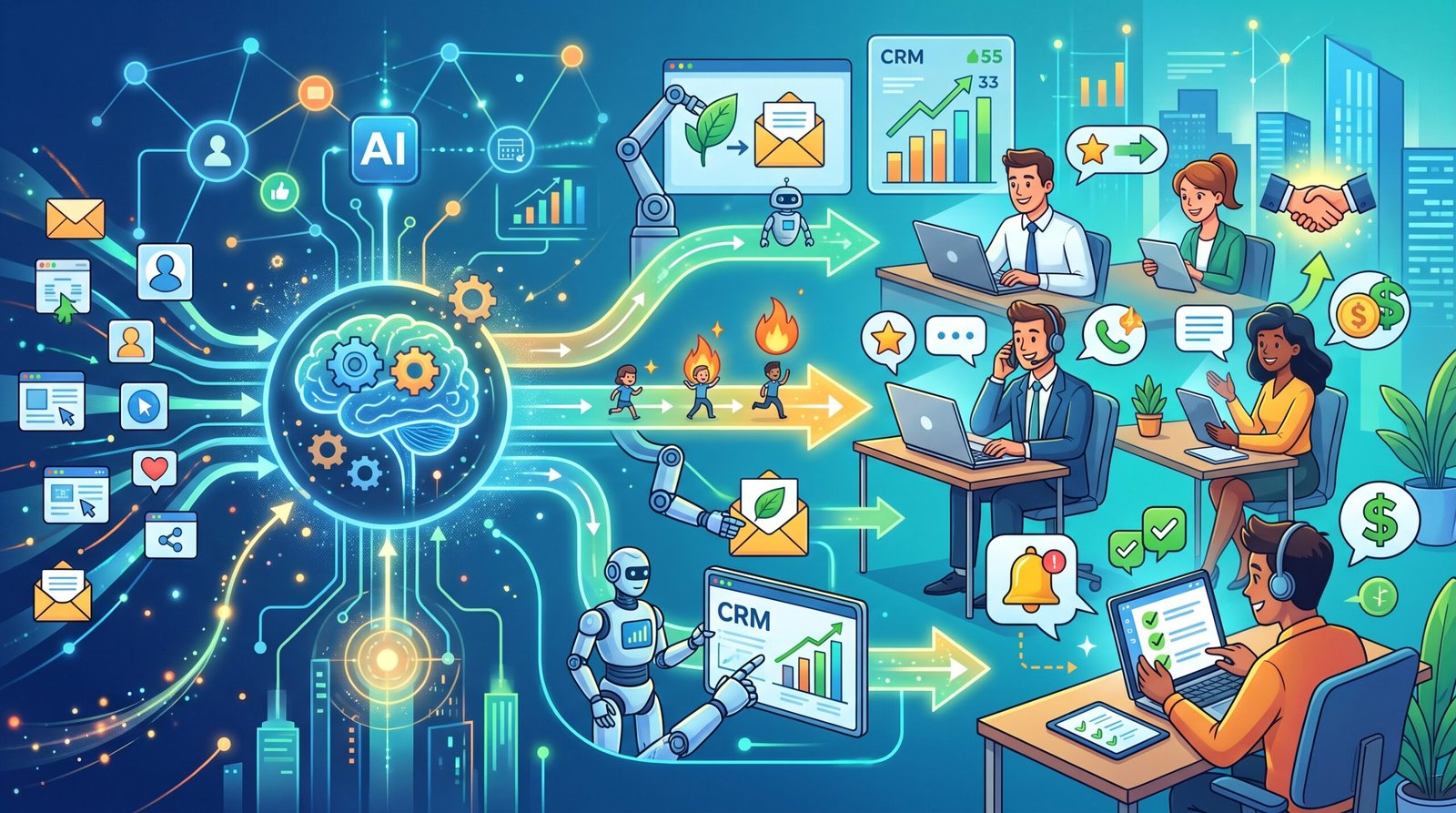
Most deals do not die on the first call. They die three weeks later when nobody follows up on time. That single gap costs sales teams more revenue than almost any other mistake in the pipeline, and it is exactly the problem AI CRM automation was built to fix.
Sales reps juggle dozens of leads at once, and something always slips through the cracks. A promising prospect goes quiet for a week, then two, then the deal just fades away.
The guide looks at how automation changes that pattern, what tasks it actually handles, and why follow-ups become real revenue instead of missed chances.
Why Follow-Ups Fall Apart Without Automation
Manual follow-up depends entirely on memory and time, and both run out fast. A rep handling fifty active leads cannot realistically remember who needs a call today versus next week. So, leads get ranked by whoever emailed most recently rather than who is actually ready to buy.
Because timing matters so much in sales, a late follow-up often means a lost deal. A prospect who does not hear back within a day or two starts looking elsewhere, and by the time a rep circles back, the moment has already passed.
AI-powered CRM automation removes this guesswork by tracking every lead automatically and flagging exactly when action is needed.
Spreadsheets and sticky notes used to fill this gap, but they break down the moment a pipeline grows past a handful of deals. Consequently, teams that rely on manual tracking watch good leads slip away simply because nobody caught the right moment to reach out.
Curious how much revenue your team might be losing to missed follow-ups? Syncrux can show you exactly where those gaps sit in your current pipeline.
What AI CRM Automation Actually Handles
CRM automation with AI takes over the repetitive parts of follow-up that used to eat hours of a rep’s week. Automated reminders trigger the moment a lead goes quiet for too long, so nobody has to remember on their own. Emails get scheduled and sent based on actual buyer behavior instead of a generic drip sequence everyone gets.
Beyond reminders, this kind of automation drafts follow-up messages tailored to where a lead sits in the pipeline. A prospect who just downloaded a pricing sheet gets a different message than one who has gone silent for three weeks.
Therefore, every touchpoint feels relevant instead of generic, and reps spend their time on conversations rather than admin work.
Meeting scheduling gets automated too, cutting out the endless back-and-forth over email trying to find a time that works. Because the system handles logistics, reps focus purely on selling once a meeting actually happens. This shift alone frees up hours every week across a typical sales team.
Scoring and Prioritizing Leads Automatically
AI sales automation also ranks leads by actual likelihood to convert, not just recency or gut feeling. The system looks at engagement patterns, response times, and behavior signals like website visits or email opens.
As a result, reps know exactly who to call first instead of working through a list in random order.
How This Actually Turns Into Revenue
Faster follow-up directly increases close rates, and the data on this consistently backs that up. Leads contacted within minutes convert at a far higher rate than those contacted hours or days later.
Since automation makes near-instant follow-up possible at scale, teams see more deals close simply from better timing alone.
Consistency also plays a bigger role than people expect. A rep having a busy week might forget a follow-up entirely, but automation does not have off days. Every lead gets tracked the same way regardless of how packed a rep’s calendar looks, so nothing falls through simply because someone got swamped.
Additionally, better prioritization means reps spend energy where it counts most. Instead of splitting attention evenly across fifty leads, they focus on the ten most likely to close this week. Consequently, the same amount of effort produces noticeably better results across the whole pipeline.
Ready to see how automated follow-ups could change your close rate? Book a quick walkthrough with Syncrux and see the system in action on your own data.
Frequently Asked Questions
How does AI CRM automation improve sales follow-ups?
It tracks every lead automatically and flags exactly when a follow-up is needed, so timing never depends on a rep remembering to check. This alone prevents the slow leaks that cost most sales teams real revenue.
What sales follow-up tasks can AI CRM automation handle?
It handles reminders, drafts follow-up emails, schedules meetings, and scores leads by likelihood to convert. Reps spend less time on admin work and more time actually talking to prospects.
Can AI CRM automation identify which leads need follow-up first?
Yes, the system ranks leads using engagement data, response patterns, and behavior signals instead of guesswork. Reps get a clear, prioritized list to work from instead of a random one.
Does AI CRM automation replace sales representatives?
No, it takes the repetitive tracking and scheduling off a rep’s plate so they can focus on actual conversations and closing deals. The relationship building still comes from the person, not the software.
Final Thoughts
AI CRM automation turns a weak spot most sales teams struggle with into a genuine advantage. Faster timing, smarter prioritization, and consistent follow-up all add up to more closed deals from the same pipeline teams already have.
Fixing this one gap often makes a bigger difference than adding more leads at the top of the funnel. Syncrux builds automation tools designed specifically to help sales teams catch every follow-up opportunity before it slips away. Visit syncrux.com today and see how much revenue is sitting in your pipeline right now, just waiting on the right follow-up.